

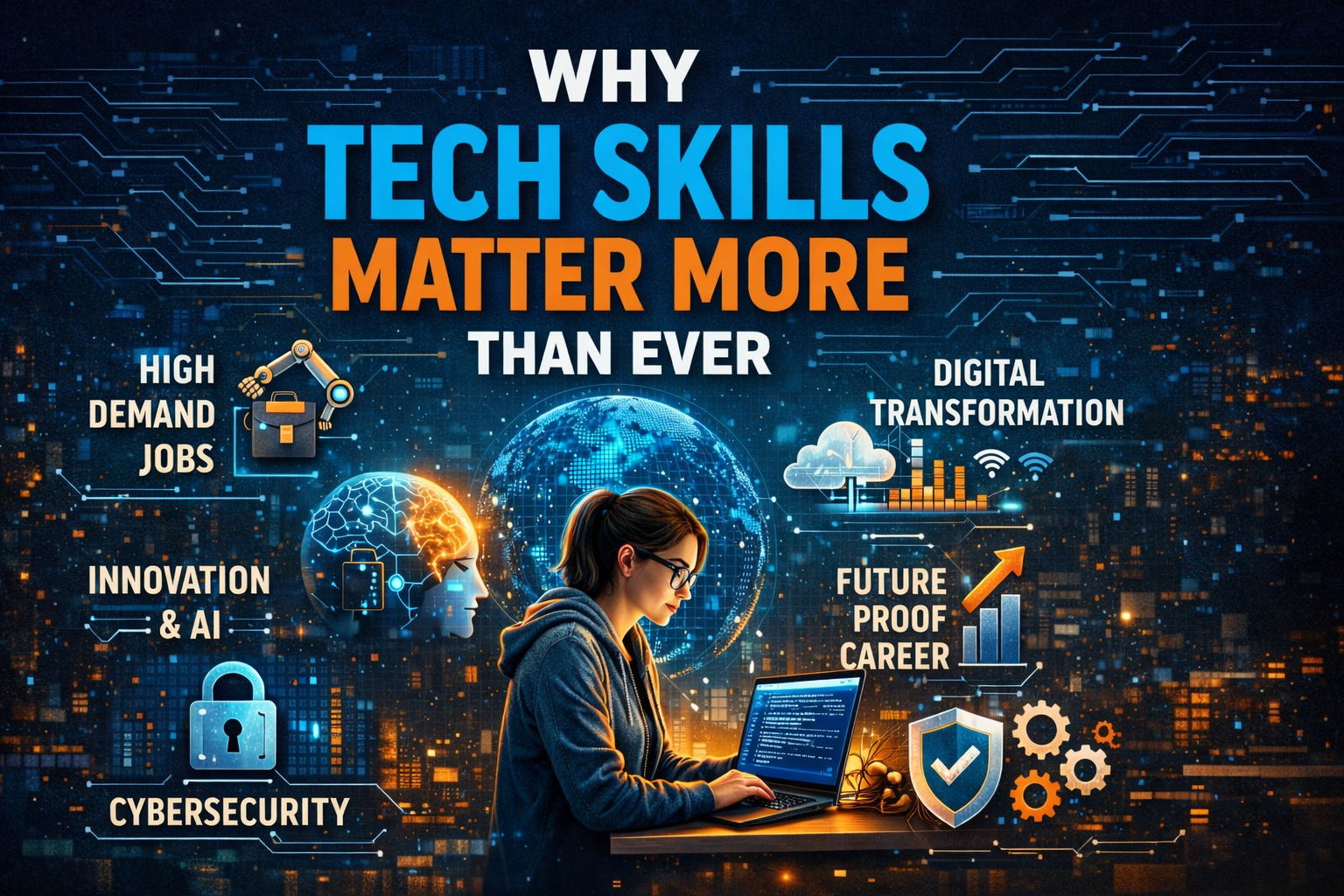
Technology is reshaping the professional world faster than ever before. In 2026, digital transformation is no longer limited to IT departments—it affects every industry, from healthcare and education to finance and manufacturing. Professionals who want to stay competitive must develop essential tech skills that align with modern workplace demands.
Knowing how to use technology effectively is now a core requirement, not an optional advantage. This article explores the essential tech skills every professional should know in 2026 and explains why these skills are critical for career growth and long‑term success.
Why Tech Skills Matter More Than Ever
The global job market is evolving toward skill‑based hiring. Employers are prioritizing practical abilities, adaptability, and digital literacy over traditional qualifications alone. Automation and artificial intelligence are changing job roles, creating new opportunities while transforming existing ones.
Professionals with strong tech skills enjoy better job security, higher productivity, and greater flexibility, including remote work options. In 2026, staying updated with technology is essential for remaining relevant in any career path.
Digital Literacy and Technology Awareness
Digital literacy is the foundation of all modern tech skills. It includes understanding how digital tools work, navigating online platforms, and using technology safely and efficiently.
In 2026, professionals must be comfortable with digital communication tools, cloud‑based platforms, and online collaboration systems. Technology awareness also means staying informed about new trends and understanding how digital changes impact your industry.
Artificial Intelligence and Automation Basics
Artificial Intelligence (AI) and automation are becoming part of everyday work. While not everyone needs to be an AI expert, understanding how AI tools function is essential.
Professionals should know how AI improves productivity, supports decision‑making, and automates repetitive tasks. In 2026, familiarity with AI‑powered tools helps professionals work smarter, save time, and adapt to evolving job requirements.
Cloud Computing Knowledge
Cloud computing is the backbone of modern digital systems. Businesses rely on cloud platforms for data storage, collaboration, and scalability.
Professionals should understand how cloud‑based tools work and how they improve efficiency. Knowledge of cloud systems enables better teamwork, remote work, and access to digital resources from anywhere.
Cybersecurity and Digital Safety
With increased digital activity comes greater security risks. Cybersecurity awareness is now an essential skill for all professionals, not just IT specialists.
Understanding basic security practices, such as protecting data, recognizing online threats, and following safe digital habits, is crucial in 2026. Strong cybersecurity awareness helps protect both personal and organizational information.
Communication and Collaboration Tools
Modern workplaces rely heavily on digital communication and collaboration platforms. Professionals must be skilled in using tools for virtual meetings, project management, and team coordination.
Effective use of digital collaboration tools improves productivity and teamwork. In 2026, strong communication skills combined with tech proficiency are key to professional success.
Problem‑Solving with Technology
Technology is not just about tools—it is about solving problems efficiently. Professionals who can use technology to analyze challenges and find solutions are highly valued.
This skill involves critical thinking, adaptability, and the ability to apply digital tools creatively. In 2026, problem‑solving with technology helps professionals handle complex tasks and changing work environments.
Data Analysis and Data‑Driven Thinking
Data plays a central role in business decisions. Professionals who can interpret data and understand basic analytics gain a strong advantage.
Data analysis skills involve reading reports, identifying patterns, and making informed decisions based on insights. In 2026, data‑driven thinking is valuable across roles, including marketing, management, finance, and operations.

Automation and No‑Code Tools
No‑code and automation tools allow professionals to automate workflows and create solutions without advanced technical knowledge. These tools are becoming widely used across industries.
Understanding automation helps professionals increase efficiency and reduce repetitive work. In 2026, no‑code skills empower individuals to innovate and improve processes independently.
Continuous Learning and Adaptability
Technology evolves constantly, making continuous learning one of the most important skills. Professionals must be open to learning new tools, systems, and methods throughout their careers.
Adaptability allows individuals to adjust to change and embrace innovation. In 2026, professionals who commit to lifelong learning remain competitive and confident in a fast‑changing digital world.
Soft Skills Combined with Tech Skills
While technical skills are essential, they are most effective when combined with strong soft skills. Communication, teamwork, creativity, and emotional intelligence enhance the value of tech expertise.
Professionals who can explain technical concepts clearly and work well with others stand out. In 2026, the most successful professionals balance technology skills with human skills.
How to Develop Essential Tech Skills
Building tech skills requires consistency and focus. Start by identifying skills relevant to your career goals and industry. Practice using real‑world tools and stay updated with industry trends.
Learning through online resources, professional communities, and hands‑on experience helps strengthen skills. Small, continuous improvements lead to long‑term success.
The Future of Professional Skills
The future workplace will be shaped by technology, automation, and digital collaboration. Professionals who embrace tech skills today will be better prepared for tomorrow’s opportunities.
Understanding technology is no longer limited to technical roles. In 2026, every professional benefits from being tech‑savvy, adaptable, and forward‑thinking.
Conclusion
Essential tech skills are a requirement for professional success in 2026. From digital literacy and data analysis to AI awareness and cybersecurity, these skills help individuals thrive in a technology‑driven world.
By continuously learning, adapting, and combining technical knowledge with strong soft skills, professionals can build resilient and future‑ready careers. Technology will continue to evolve, and those who evolve with it will succeed.