
Artificial Intelligence (AI) has become a game‑changing force for online businesses in 2026. What once felt like a futuristic concept is now a practical and essential part of digital operations. From e‑commerce stores and SaaS platforms to content websites and online service providers, AI is deeply integrated into how businesses operate, grow, and compete.
Online businesses today face intense competition, fast‑changing customer expectations, and massive amounts of data. AI helps solve these challenges by automating processes, improving decision‑making, and delivering personalized user experiences. In 2026, businesses that fail to adopt AI risk falling behind in efficiency, profitability, and customer trust.
This article explains in detail how artificial intelligence is changing online businesses in 2026 and why it has become a necessity rather than a luxury.

AI‑Driven Customer Support and Engagement
One of the most visible impacts of AI on online businesses is customer support. AI‑powered chatbots and virtual assistants now handle a large portion of customer interactions. These systems provide instant responses, resolve common issues, and guide users through purchases or service inquiries.
In 2026, AI chatbots are far more intelligent than earlier versions. They understand context, recognize customer intent, and learn from previous interactions. This results in faster response times, improved customer satisfaction, and lower operational costs for businesses.
AI also enables proactive engagement by predicting customer needs and offering help before problems arise.
Advanced Personalization for Better Conversions
Personalization has become a major competitive advantage for online businesses. AI analyzes user behavior such as browsing history, search patterns, purchase data, and engagement levels to create highly customized experiences.
E‑commerce platforms use AI to recommend products, adjust homepage layouts, and deliver personalized discounts. Content websites personalize articles and newsletters based on user interests. In 2026, personalization powered by AI significantly increases conversion rates, customer loyalty, and repeat purchases.
Customers expect brands to understand their preferences, and AI makes this possible at scale.
Artificial Intelligence in Digital Marketing
Digital marketing in 2026 is largely driven by artificial intelligence. AI tools help businesses plan, execute, and optimize marketing campaigns across multiple channels.
AI improves:
- Search engine optimization through smart keyword analysis
- Paid advertising with accurate audience targeting
- Email marketing using behavior‑based automation
- Social media marketing with content performance predictions
By analyzing real‑time data, AI helps marketers adjust strategies instantly, reducing wasted ad spend and increasing return on investment.
Business Process Automation
Automation is one of the biggest reasons online businesses adopt AI. Repetitive and time‑consuming tasks such as order processing, inventory tracking, billing, and customer onboarding are now automated.
AI‑powered systems reduce human error, save time, and improve consistency. In 2026, automation allows businesses to scale operations without significantly increasing costs. Teams can focus on creativity, strategy, and growth instead of routine tasks.
AI in E‑Commerce Operations
E‑commerce businesses benefit greatly from artificial intelligence. AI helps with demand forecasting, dynamic pricing, inventory management, and logistics optimization.
In 2026, online stores use AI to predict buying trends, manage stock efficiently, and avoid over‑ or under‑stocking. Smart pricing algorithms adjust product prices based on demand, competition, and customer behavior, maximizing revenue and profit margins.
Data‑Driven Decision Making
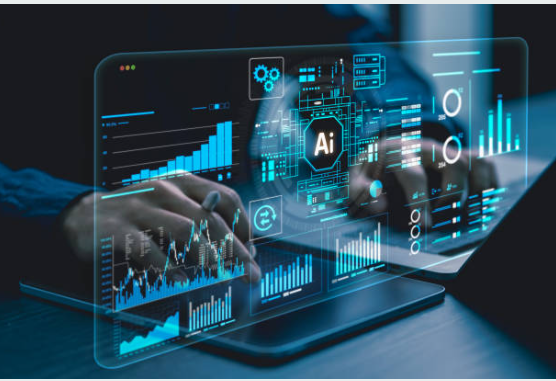
Data is one of the most valuable assets for online businesses, and AI turns raw data into actionable insights. AI analytics tools process massive datasets quickly and identify patterns that humans may miss.
Business owners rely on AI dashboards to understand customer behavior, sales trends, and marketing performance. In 2026, decisions based on AI insights are faster, smarter, and more accurate, giving businesses a strong competitive edge.
AI and Online Security
With the growth of online businesses, cyber threats have also increased. AI plays a critical role in fraud detection and online security. AI systems monitor transactions and user behavior to identify suspicious activities in real time.
In 2026, AI helps prevent payment fraud, account hacking, and data breaches. Strong security builds customer trust and protects businesses from financial and reputational damage.
AI‑Powered Content Creation
Content creation is another area transformed by AI. Businesses use AI tools to generate blog ideas, write drafts, optimize headlines, and create marketing copy.
While human creativity remains important, AI speeds up production and ensures consistency. In 2026, AI‑assisted content creation helps businesses maintain a strong online presence and stay competitive in search rankings.
Cost Efficiency and Scalability
AI reduces operational costs by automating tasks and improving efficiency. Small and medium‑sized businesses can now compete with larger companies using affordable AI tools.
In 2026, AI enables rapid growth without the need for large teams. Businesses can scale faster, serve more customers, and expand into new markets with fewer resources.
Challenges of AI Adoption
Despite its benefits, AI adoption comes with challenges. Businesses must ensure data quality, protect user privacy, and use AI ethically. Skilled professionals are also required to manage and optimize AI systems.
In 2026, responsible AI usage and transparency are essential for long‑term success.
The Future of AI in Online Businesses
The influence of artificial intelligence will continue to grow beyond 2026. Future advancements will bring smarter automation, deeper personalization, and stronger integration across digital platforms.
Online businesses that invest in AI today are preparing themselves for long‑term success in an increasingly digital economy.

Conclusion
Artificial intelligence is transforming online businesses in 2026 by improving customer experience, marketing performance, automation, security, and decision‑making. AI empowers businesses to operate smarter, grow faster, and compete more effectively.
For online businesses, embracing AI is no longer optional—it is essential for survival and success in the digital future.