

In 2026, search engine optimization (SEO) has become more competitive, data-driven, and user-focused than ever before. With Google’s evolving algorithms, AI-powered search results, and voice-based queries on the rise, keyword research and optimization remain the foundation of successful SEO strategies — especially for beginners.
Many new bloggers and website owners make the mistake of writing content without proper keyword planning. As a result, their articles fail to rank, no matter how well written they are. This guide explains keyword research and optimization for SEO beginners in 2026, helping you understand how to find the right keywords, optimize content correctly, and improve search engine visibility.

Understanding Keyword Research in 2026
Keyword research is the process of identifying the search terms users type into search engines to find information. In 2026, keyword research goes beyond simple search volume — it focuses on search intent, relevance, and user experience.
Search engines now prioritize content that best answers user queries instead of just matching exact keywords. This means beginners must understand why users are searching for a term and what type of content they expect to see.
Keyword research helps you understand your target audience, create content users actually want, improve ranking chances, and increase organic traffic. Without proper keyword research, SEO efforts become guesswork instead of strategy.
Types of Keywords Every Beginner Should Know
Before starting keyword optimization, beginners must understand different keyword types commonly used in SEO.
Short-tail keywords are broad search terms like “SEO tips” or “keyword research.” These keywords usually have high competition and are harder to rank for.
Long-tail keywords are more specific phrases such as “keyword research for SEO beginners in 2026.” These keywords have lower competition and higher conversion potential.
Informational keywords target users looking for knowledge, while transactional keywords indicate purchase intent. In 2026, long-tail and intent-based keywords are more effective for beginners because they attract targeted traffic with higher engagement.
Best Keyword Research Tools for Beginners in 2026
Keyword research tools make it easier to find relevant and profitable keywords. Beginners in 2026 have access to both free and paid options.
Google Keyword Planner is useful for discovering keyword ideas and trends. Google Search Console provides real performance data from your own website.
Advanced tools like Ahrefs, SEMrush, and Ubersuggest offer insights such as keyword difficulty, competitor analysis, and search intent. Free tools like AnswerThePublic and Google Trends help identify user questions and seasonal interests.
Using multiple tools together gives beginners a more accurate and reliable keyword strategy.
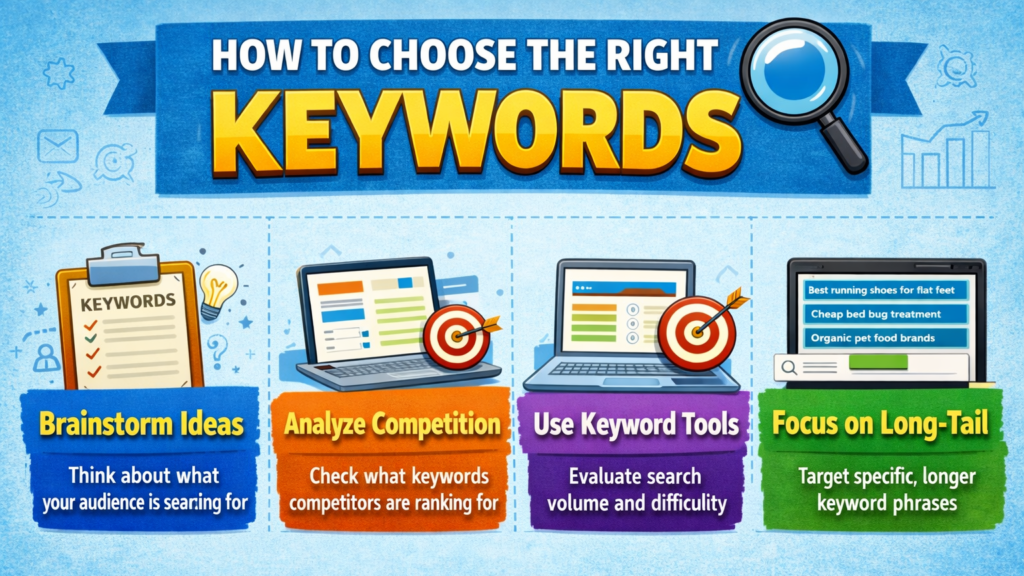
How to Choose the Right Keywords
Choosing the right keyword is more important than choosing a popular one. Beginners should focus on keywords that balance search volume, competition, and relevance.
High-competition keywords are difficult to rank for, especially on new websites. Instead, target low to medium competition keywords that clearly match user intent.
Analyzing top-ranking pages also helps determine whether a keyword is realistic for your site. If the search results are dominated by high-authority websites, refining the keyword is often a smarter move.
Keyword Optimization Best Practices in 2026
Keyword optimization in 2026 focuses on natural placement rather than repetition. Keyword stuffing no longer works and can harm rankings.
Your primary keyword should appear in the title, URL, meta description, and within the first 100 words. Secondary keywords should be used naturally in subheadings and body content.
Using synonyms and related terms improves topical relevance. Internal linking, descriptive anchor text, and optimized image alt text also strengthen on-page SEO.
Importance of Search Intent in Keyword Strategy
Search intent is a critical ranking factor in modern SEO. Search engines classify intent into informational, navigational, transactional, and commercial investigation.
If a keyword has informational intent, content should focus on guides and explanations. Transactional keywords require product-focused content such as reviews or comparisons.
Matching content type with search intent improves user satisfaction, reduces bounce rate, and increases time on page — all important ranking signals in 2026.
Role of AI and Voice Search in Keyword Research
AI and voice search have changed how people search online. Users now ask longer, conversational questions using voice assistants and smart devices.
This shift makes natural language keywords more important than exact-match phrases. AI-powered search engines also analyze meaning and context instead of just keyword placement.
Optimizing for voice search involves using question-based keywords, clear answers, and well-structured content.
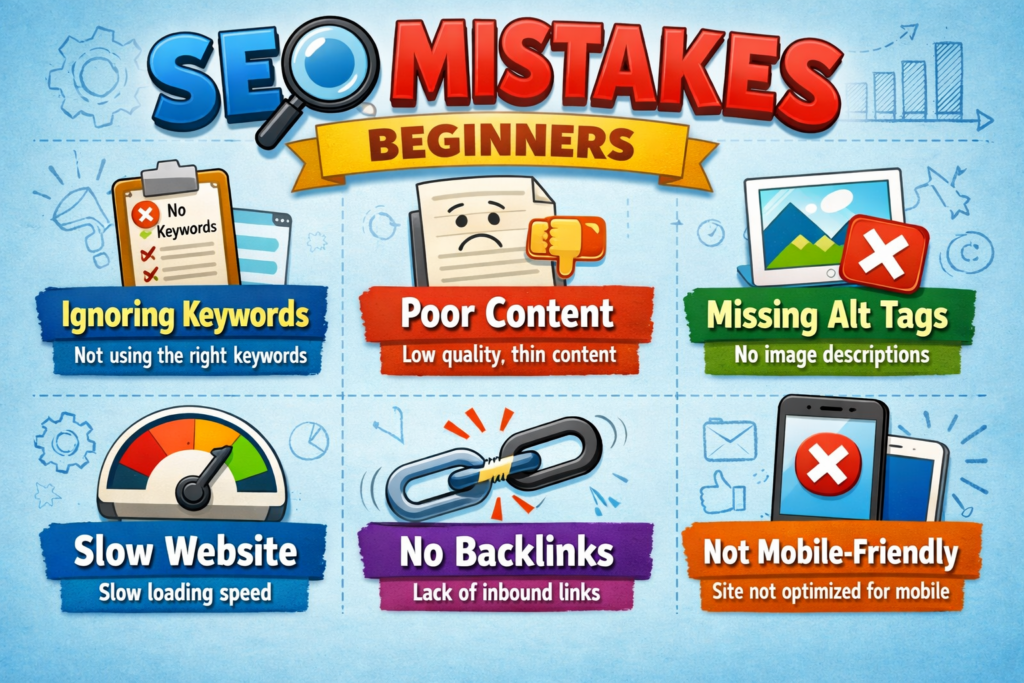
Common Keyword Research Mistakes Beginners Should Avoid
One of the most common mistakes is targeting highly competitive keywords too early. This often leads to poor results and wasted effort.
Ignoring search intent is another major issue. Writing content that does not match user expectations reduces ranking potential.
Over-optimization, such as repeating keywords excessively, can also negatively impact SEO. Modern search engines favor topic depth and relevance over repetition.
Measuring Keyword Performance and Optimization Results
Tracking keyword performance is essential for long-term SEO success. Google Search Console helps monitor impressions, clicks, and average ranking positions.
Analytics tools provide insight into user behavior, such as bounce rate and session duration. Updating old content with better keywords and fresh information can significantly improve rankings.
SEO is an ongoing process, and keyword optimization requires regular review and adjustments.
Conclusion
Keyword research and optimization remain essential skills for SEO beginners in 2026. While algorithms and tools continue to evolve, understanding users and delivering valuable content remains the core of successful SEO.
By choosing the right keywords, optimizing content naturally, and focusing on search intent, beginners can build sustainable organic traffic. Mastering keyword research today will give your blog a strong competitive advantage in the future.




Wow, wonderful weblog structure! How lengthy have you ever been blogging for?
you made blogging glance easy. The full look of your site
is wonderful, as smartly as the content!
Thank You very Much.
Hey! This is kind of off topic but I need some help from an established blog.
Is it very difficult to set up your own blog? I’m not very techincal
but I can figure things out pretty fast. I’m thinking about setting up my own but
I’m not sure where to begin. Do you have any tips
or suggestions? Appreciate it
Yes I have Tips For you Bro!
For most up-to-date news you have to visit world-wide-web and
on web I found this web page as a finest site for newest
updates.
This is really interesting, You’re an excessively skilled blogger.
I have joined your rss feed and look forward to seeking
more of your fantastic post. Also, I have shared your site
in my social networks
Thanks You Very Much