

Quantum computing made headlines in early 2026 with revelations that several research groups and tech companies have achieved quantum advantage on real-world workloads. This milestone — long anticipated but rarely demonstrated outside controlled environments — signals a new chapter in computing where quantum machines begin outperforming classical systems on specific tasks.
The implications are far-reaching, from accelerated AI model training to breakthroughs in cryptography and optimization problems.
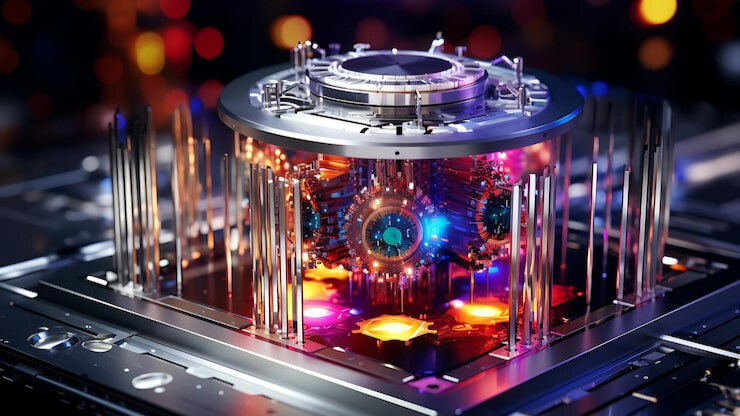
What Is Quantum Advantage?
Quantum advantage refers to situations where:
A quantum computer solves problems more efficiently than the best classical supercomputers.
In 2026, multiple teams confirmed quantum processors tackling workloads in:
- Quantum chemistry simulations
- Complex optimization
- AI sampling problems
These results may not yet replace classical computing for everyday tasks, but they demonstrate real progress toward utility beyond experimental phases.
AI and Quantum Computing — A Symbiotic Future
Artificial intelligence stands to benefit significantly from quantum acceleration.
Quantum systems can potentially:
- Improve model training times
- Enhance optimization algorithms
- Enable new forms of machine learning patterns
Companies exploring hybrid architectures — classical CPUs + GPUs + quantum co-processors — are preparing stacks that could redefine computational limits.
Cryptography Under Scrutiny
Quantum computing also poses challenges. Classical encryption schemes such as RSA and ECC — foundational to modern cybersecurity — could eventually become vulnerable.
Industry and academic researchers are accelerating work on:
- Post-quantum cryptography
- New algorithms resistant to quantum attacks
Governments and enterprises are already mandating quantum-resistant standards for sensitive data systems.

Who’s Leading the Quantum Push?
IBM
IBM’s quantum roadmap continues to expand qubit counts and coherence times, offering increasingly complex experimental systems.
Google
Following its earlier quantum milestone, Google has refined error mitigation techniques and proposed new hybrid algorithms.
European Consortia
Collaborations across Europe focus on scalable hardware and software ecosystems designed for quantum integration.
Startups
A growing wave of startups targets niche quantum services — from quantum AI startups to quantum encryption firms.
Practical Use Cases Emerging in 2026
Quantum computing isn’t yet widespread, but early use cases include:
- Material science simulations
- Optimization for logistics
- Hybrid AI model acceleration
Automotive, aerospace, and drug discovery sectors are among early adopters.
Impact on Workforce and Education
The quantum revolution is driving demand for new skill sets:
- Quantum algorithm developers
- Quantum hardware engineers
- Post-quantum cybersecurity experts
Educational institutions are introducing quantum computing tracks to prepare future talent.
What This Means for Technology in 2026
Quantum computing’s steady march toward practical relevance means:
- New research collaborations worldwide
- Greater investment in next-gen computing
- A future where quantum + AI solve problems previously out of reach
While fully generalized quantum computers may still be years away, the momentum in 2026 is undeniable.
Conclusion
2026’s breakthroughs in quantum computing mark a critical pivot point. As research converges with practical experimentation, quantum systems are beginning to show value in real workloads. Stakeholders across industries — from AI to cryptography — now watch this space closely, anticipating a new era of innovation.