
Introduction
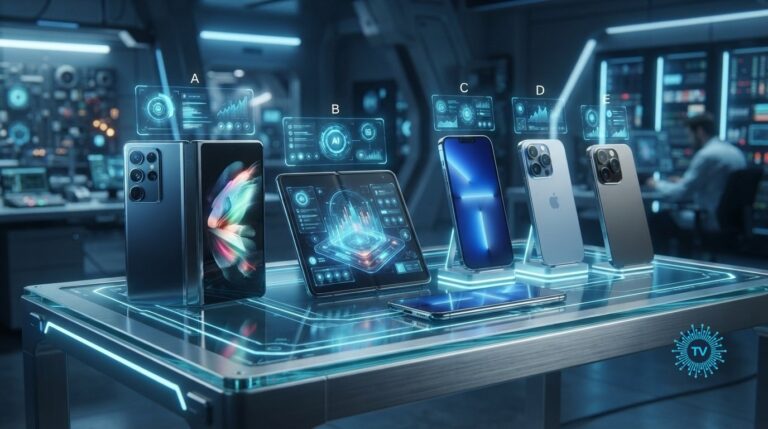
The new AI trend in 2026 is transforming the way people work, learn, communicate, and build technology. Artificial intelligence is no longer limited to chatbots or simple automation. Today, AI is becoming more intelligent, more accessible, and more deeply integrated into everyday life. From AI-powered smartphones and autonomous software agents to healthcare innovations and advanced robotics, 2026 is shaping up to be one of the biggest years for artificial intelligence.
Businesses are investing billions of dollars in AI technologies to improve productivity, automate repetitive tasks, and deliver better customer experiences. At the same time, developers are using AI coding assistants to build software faster, while students and professionals rely on AI tools for research, learning, and creative work. This rapid adoption is changing industries across the globe and creating new opportunities for innovation.
In this article, we’ll explore the new AI trend in 2026, explain why artificial intelligence is evolving so quickly, and examine the most important technologies driving this transformation. You’ll also learn which industries are benefiting the most, the challenges organizations should prepare for, and how businesses can stay competitive in an AI-driven future.
Whether you’re a technology enthusiast, business owner, software developer, or simply curious about the future of AI, this guide will help you understand the innovations that are shaping the next generation of artificial intelligence.
Why Artificial Intelligence Is Growing So Fast in 2026
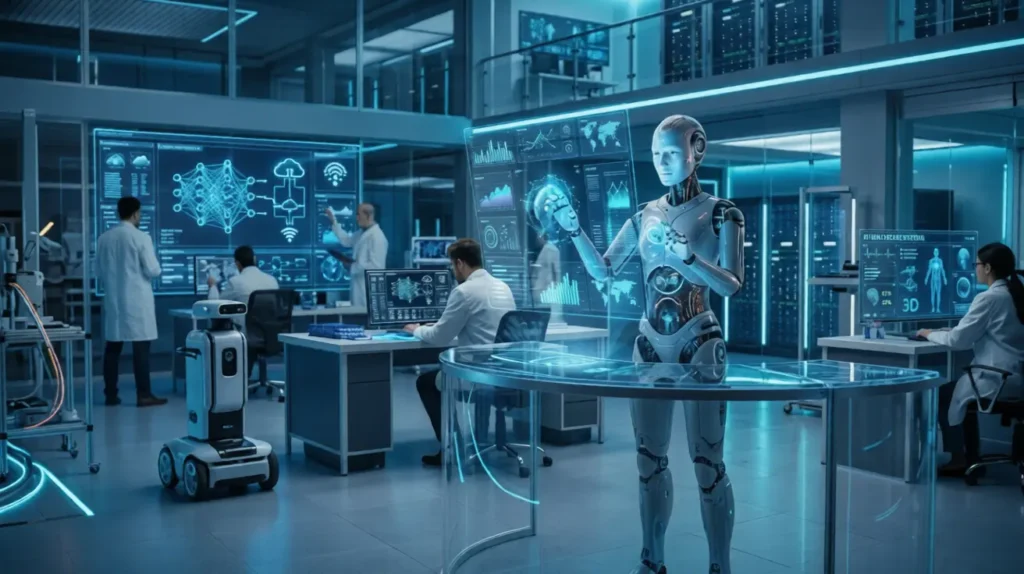
Artificial intelligence has experienced remarkable growth over the past few years, but 2026 marks a turning point where AI is becoming a core part of everyday technology rather than an optional feature. Several key factors are driving this rapid expansion.
Massive Investment in AI
Global technology companies continue to invest heavily in artificial intelligence research and infrastructure. Cloud providers, semiconductor manufacturers, and software companies are developing faster AI models capable of handling increasingly complex tasks. These investments are making AI tools more powerful and affordable for businesses of all sizes.
More Powerful AI Hardware
The latest generation of AI chips and graphics processors has significantly improved computing performance. Modern hardware allows AI models to process enormous amounts of data faster than ever before, enabling real-time applications such as intelligent assistants, image generation, and advanced data analysis.
Cloud Computing and Open-Source Models
Cloud platforms now make enterprise-level AI accessible to startups, developers, and small businesses without requiring expensive infrastructure. At the same time, open-source AI models have encouraged faster innovation by allowing developers worldwide to build, customize, and improve AI-powered applications.
AI Adoption Across Every Industry
Artificial intelligence is no longer limited to technology companies. Healthcare providers, banks, educational institutions, retailers, manufacturers, and cybersecurity firms are all integrating AI into their daily operations. This widespread adoption is accelerating innovation while creating entirely new business opportunities.
As AI becomes more efficient, affordable, and practical, experts expect its influence to continue expanding throughout 2026 and beyond. The following sections explore the most important trends that are defining this exciting new era of artificial intelligence.
Top New AI Trends in 2026
Artificial intelligence is evolving faster than ever before. The new AI trend in 2026 is no longer limited to simple automation or chatbots. Today’s AI systems are becoming smarter, more independent, and capable of solving real-world problems across multiple industries. Below are the biggest AI trends shaping the future of technology.
AI Agents Becoming Personal Assistants
One of the most significant developments in the new AI trend in 2026 is the rise of AI agents. Unlike traditional chatbots that only answer questions, AI agents can perform complete tasks with minimal human input. They can schedule meetings, summarize emails, create reports, write code, analyze data, and even manage entire workflows.
Businesses are already integrating AI agents into customer support, marketing, software development, and project management. As these systems become more reliable, they are expected to function as intelligent digital assistants capable of handling complex responsibilities that once required human intervention.
Multimodal AI Is Becoming the New Standard
Another major new AI trend in 2026 is multimodal artificial intelligence. Modern AI models are no longer limited to understanding text alone. They can process images, videos, voice recordings, documents, and written content simultaneously to provide more accurate and context-aware responses.
For example, users can upload an image, ask questions about it, request a written summary, and even generate a related video using the same AI system. This capability is transforming industries such as education, healthcare, customer service, and digital marketing.
Multimodal AI is also making software applications more user-friendly because people can interact naturally using speech, visuals, or written instructions instead of relying on traditional interfaces.
On-Device AI for Smartphones and Laptops
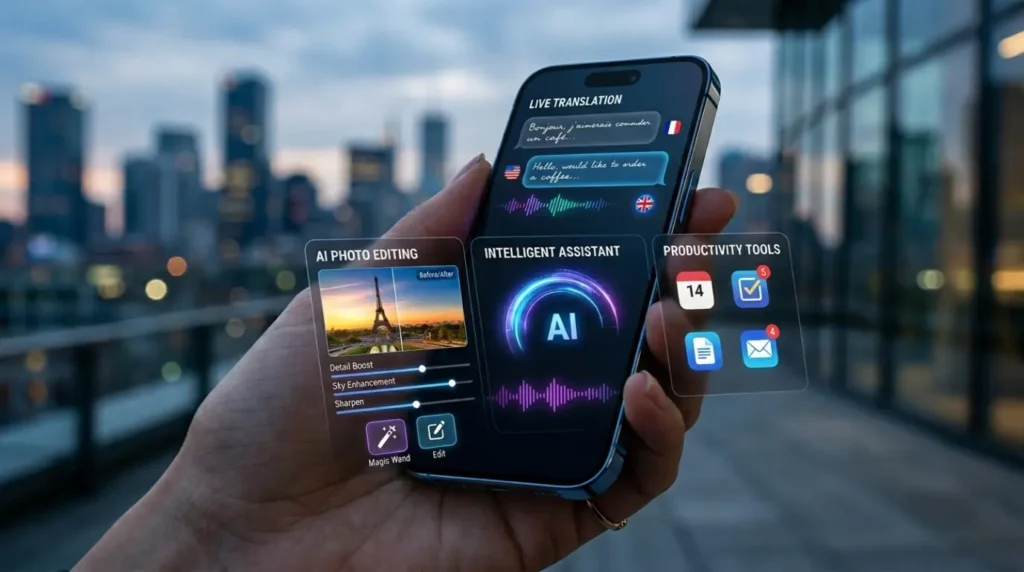
Artificial intelligence is now moving directly onto personal devices instead of depending entirely on cloud servers. This new AI trend in 2026 allows smartphones, tablets, and AI-powered laptops to perform complex AI tasks locally.
Running AI directly on the device provides several advantages:
- Faster response times
- Improved privacy
- Reduced internet dependency
- Better battery optimization
- Offline AI features
Leading smartphone manufacturers are integrating AI into cameras, voice assistants, photo editing, live translation, and productivity features. AI PCs are also becoming increasingly popular among professionals who require intelligent software assistance without compromising data security.
If you’re interested in how smartphones are integrating artificial intelligence, you can also read our detailed guide on Samsung Galaxy S26 Ultra AI Features Explained.
AI in Healthcare
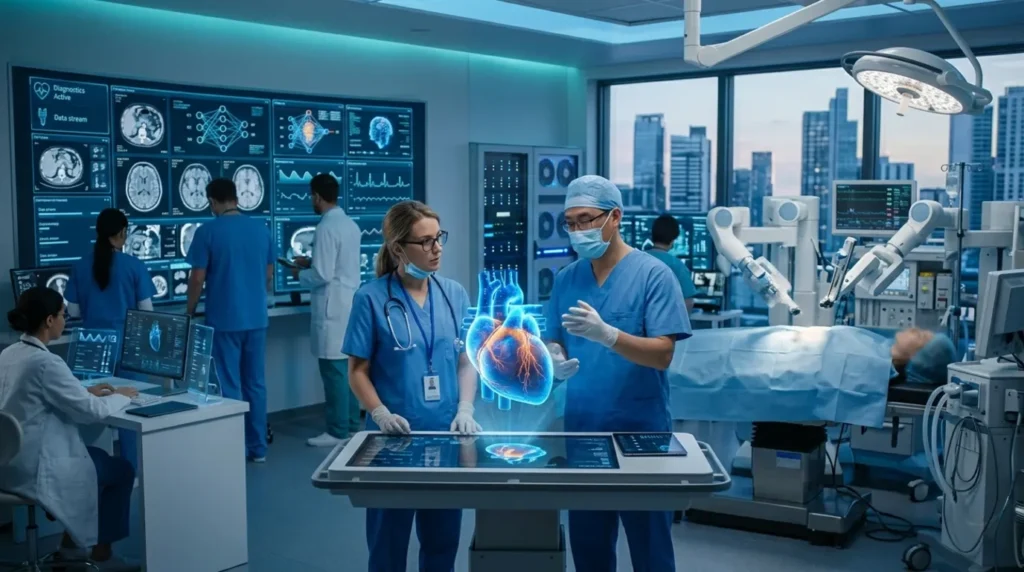
Healthcare is experiencing one of the biggest transformations thanks to artificial intelligence. Hospitals and research organizations now use AI to assist doctors in diagnosing diseases, analyzing medical scans, identifying treatment options, and accelerating drug discovery.
Machine learning algorithms can analyze thousands of medical records within seconds, helping healthcare professionals make faster and more informed decisions. AI-powered virtual assistants are also improving patient communication by answering common medical questions and simplifying appointment scheduling.
Although AI cannot replace experienced medical professionals, it is becoming an essential tool for improving efficiency, reducing errors, and delivering better patient care.
AI in Software Development
Software development is changing rapidly because of AI-powered coding assistants. Developers now use intelligent tools to generate code, detect bugs, explain complex programming concepts, write documentation, and automate repetitive development tasks.
These AI assistants help programmers focus more on solving business problems instead of spending hours on routine coding activities. As a result, development teams can build software faster while maintaining higher code quality.
As AI speeds up software development, maintaining clean and scalable code becomes even more important. You can learn practical strategies in our guide on How to Manage Tech Debt in Your Software Projects.
AI Video and Image Generation
Generative AI continues to revolutionize digital content creation. Businesses, designers, marketers, and content creators now use AI to generate high-quality images, promotional videos, social media graphics, product mockups, and marketing materials within minutes.
This technology significantly reduces production time while making professional-quality content accessible to individuals and small businesses with limited budgets.
AI-generated media is also becoming an essential tool for YouTubers, educators, advertisers, and creative professionals looking to increase productivity without sacrificing quality.
AI Robotics
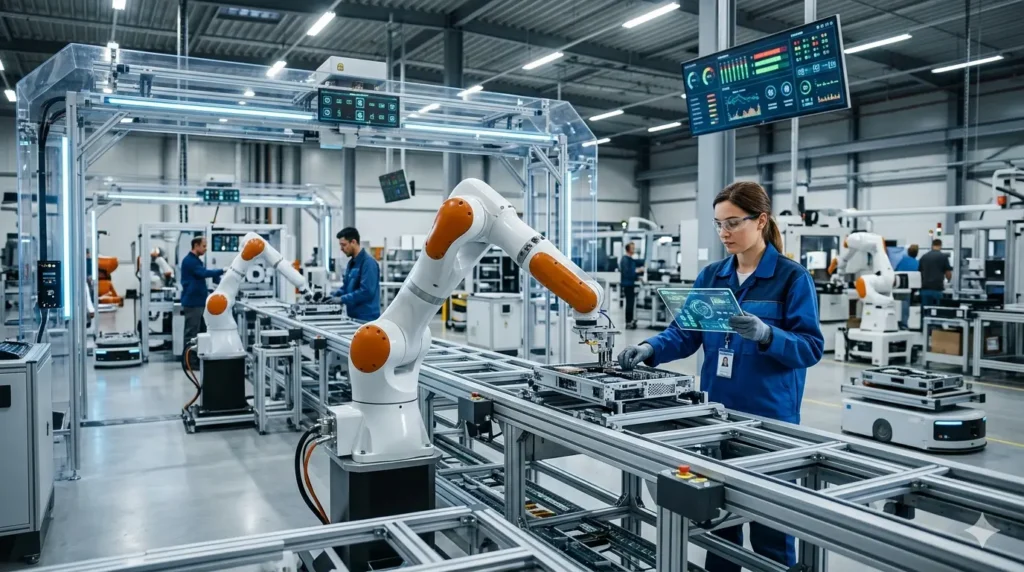
AI-powered robotics is expanding beyond manufacturing into healthcare, logistics, agriculture, retail, and public services. Modern robots are capable of understanding their surroundings, making decisions, avoiding obstacles, and working safely alongside humans.
Warehouses now rely on AI robots to organize inventory, while factories use intelligent robotic systems to improve production efficiency. Delivery robots and autonomous machines are also becoming more common in urban environments.
As artificial intelligence continues to evolve, robotics will play an increasingly important role in solving labor shortages, improving workplace safety, and increasing operational efficiency across industries.
Which Industries Will Benefit the Most?
The new AI trend in 2026 is transforming nearly every industry. From healthcare and finance to education and manufacturing, artificial intelligence is helping organizations improve efficiency, reduce costs, and make smarter decisions. Below are some of the sectors expected to benefit the most.
Healthcare
AI is enabling doctors and medical professionals to detect diseases earlier, analyze medical images more accurately, and create personalized treatment plans. Hospitals are also using AI-powered systems to improve patient management and reduce administrative workloads.
Finance
Banks and financial institutions are using AI to detect fraudulent transactions, assess financial risks, automate customer support, and provide personalized financial recommendations. AI-powered analytics also help businesses make faster and more informed investment decisions.
Education
Educational platforms are using AI to create personalized learning experiences for students. Intelligent tutoring systems can adapt lessons according to individual learning speeds, making education more interactive and effective.
Cybersecurity
As cyber threats continue to evolve, AI has become an essential tool for identifying suspicious activities, detecting malware, and responding to security incidents in real time. Modern cybersecurity platforms use machine learning to analyze millions of events every day and stop attacks before they cause damage.
Retail
Retail businesses are improving customer experiences through AI-powered product recommendations, demand forecasting, inventory management, and intelligent chat support. These technologies help companies increase sales while reducing operational costs.
Manufacturing
Factories are integrating AI into production lines to monitor equipment performance, predict maintenance needs, and improve product quality. Smart manufacturing reduces downtime and increases overall efficiency.
Transportation
Artificial intelligence is helping transportation companies optimize delivery routes, manage traffic systems, improve fleet operations, and support the development of autonomous vehicles. These innovations are expected to make transportation safer and more efficient in the coming years.
Challenges of the New AI Trend in 2026
Although artificial intelligence offers enormous benefits, it also introduces several important challenges that businesses, governments, and developers must address.
Privacy and Data Protection
AI systems often rely on large amounts of personal and business data. Organizations must ensure that user information is collected, stored, and processed responsibly while complying with privacy regulations.
Cybersecurity Risks
As AI becomes more powerful, cybercriminals may also use advanced AI techniques to launch sophisticated attacks. Businesses should invest in strong cybersecurity measures to protect sensitive information and digital infrastructure.
For more information about responsible AI development and security best practices, you can explore Google AI.
AI-Generated Misinformation
The rapid growth of AI-generated text, images, videos, and voice content has increased concerns about misinformation and deepfakes. Organizations must verify AI-generated content before publishing or using it for decision-making.
Workforce Transformation
Rather than replacing every job, AI is expected to change the nature of work. Many repetitive tasks will become automated, while employees will increasingly focus on creativity, strategic thinking, and complex problem-solving. Continuous learning and upskilling will become essential for long-term career success.
Ethical and Regulatory Concerns
Governments around the world are developing regulations to ensure AI is used responsibly. Companies must build transparent, fair, and accountable AI systems while minimizing bias and protecting user rights.
How Businesses Can Prepare
Businesses that adapt early to the new AI trend in 2026 will be better positioned to remain competitive in the future.
Organizations should begin by identifying areas where AI can improve productivity and automate repetitive processes. Investing in employee training, adopting AI-powered software, and building a culture of innovation will help companies maximize the benefits of artificial intelligence.
Business leaders should also prioritize cybersecurity, data privacy, and responsible AI implementation. Working with trusted AI platforms and following industry best practices can reduce potential risks while improving operational efficiency.
Companies interested in enterprise AI solutions can also explore the latest innovations from Microsoft AI to understand how AI technologies are transforming modern businesses.
Frequently Asked Questions
What is the biggest AI trend in 2026?
The biggest AI trend in 2026 is the rapid adoption of AI agents, multimodal AI systems, on-device artificial intelligence, and AI-powered automation across multiple industries.
Will AI replace software developers?
No. AI is expected to assist software developers by automating repetitive coding tasks, generating documentation, and improving productivity. Human developers will continue to play a critical role in software design, architecture, and problem-solving.
Which AI tools are growing the fastest?
AI assistants, AI coding tools, image and video generation platforms, enterprise automation systems, and intelligent search technologies are among the fastest-growing AI tools in 2026.
Is AI safe for businesses?
Yes, when implemented responsibly. Businesses should combine AI adoption with strong cybersecurity, data privacy policies, employee training, and ethical governance to ensure safe and reliable use.
Conclusion
The new AI trend in 2026 represents much more than technological advancement—it marks a fundamental shift in how people work, create, communicate, and solve problems. AI agents, multimodal systems, intelligent robotics, healthcare innovations, and AI-powered software development are transforming industries at an unprecedented pace.
While challenges such as privacy, cybersecurity, and ethical concerns remain important, the opportunities created by artificial intelligence are even greater. Businesses that embrace AI responsibly, invest in employee skills, and adopt innovative technologies will be better prepared for the future.
Whether you’re a developer, entrepreneur, student, or technology enthusiast, now is the perfect time to understand and explore the latest AI innovations. Staying informed about these emerging trends today will help you build valuable skills and remain competitive in tomorrow’s digital economy.